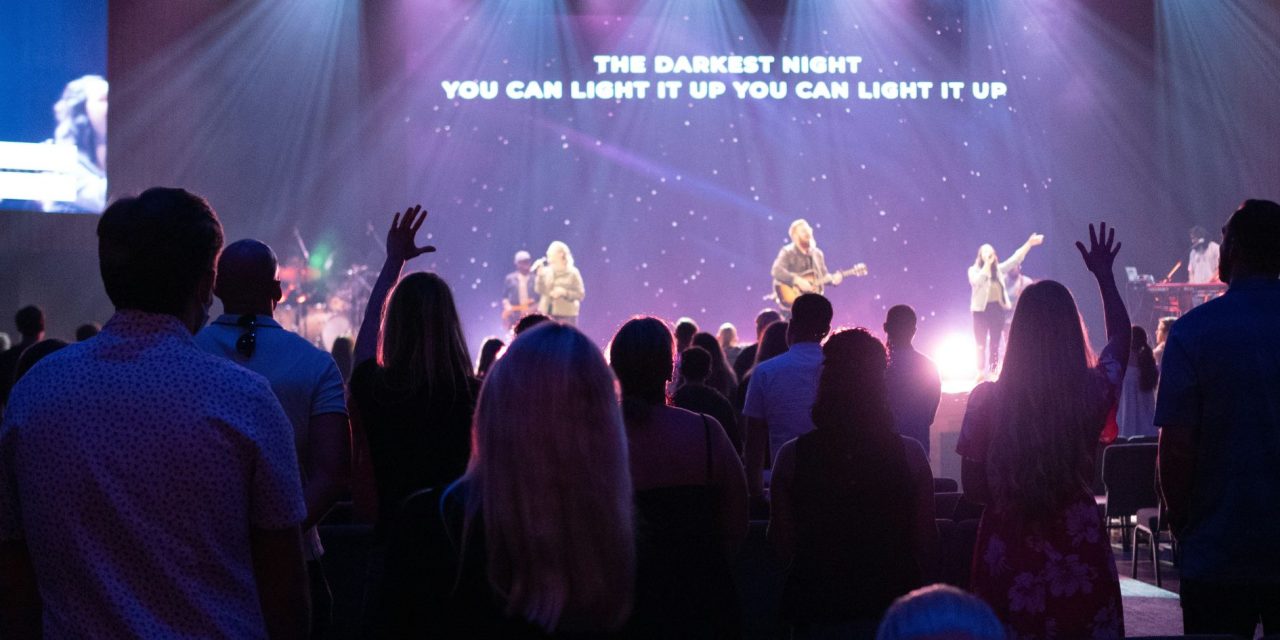
Have you ever finished leading worship and realized the congregation mostly watched instead of worshipped?
It’s an easy trap to fall into. Even the simplest acoustic worship night can quietly become a performance if people don’t feel invited to participate. Yet some of the most powerful moments in church happen when every voice joins together—when the room stops listening to the worship team and starts worshipping as one body.
The good news is that creating that kind of atmosphere doesn’t require a bigger band, better equipment, or a polished production. Often, it’s the small moments—an echoed chorus, a shared prayer, or a simple invitation to respond—that transform an audience into a congregation fully engaged in worship.
Echo Singing for Easy Learning
One of the simplest ways to encourage participation is through echo singing.
The worship leader sings a short phrase, pauses, and the congregation repeats it back. This approach works especially well when introducing a new chorus or revisiting a familiar hymn, allowing everyone to join confidently without worrying about getting the words wrong.
For example, you might sing:
“Amazing grace, how sweet the sound…”
Then pause briefly before inviting the congregation to repeat the line together.
Repeating the chorus once or twice after the echo helps everyone become comfortable with the melody and creates a unified atmosphere of worship.
Prayer Groups That Build Fellowship
Acoustic worship nights can also include intentional moments of prayer between songs.
Instead of remaining seated, invite people to form small groups of three. One person shares something they’re thankful for, another briefly shares a prayer need, and the third leads a short prayer.
Keeping each person to about one minute ensures the evening flows naturally while creating meaningful opportunities for fellowship.
These simple moments remind the church that worship includes both singing and caring for one another.
Harmony Prompts That Enrich Congregational Worship
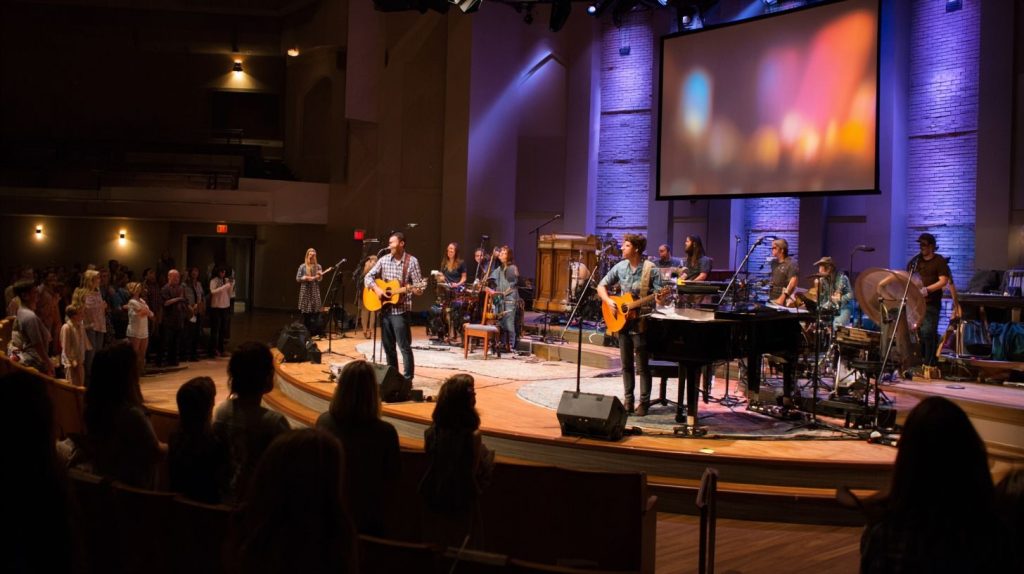
Acoustic settings allow natural harmonies to shine.
Before a familiar chorus, encourage confident singers with simple guidance such as:
- Sopranos remain on the melody.
- Altos sing a third below.
- Lower voices strengthen the harmony naturally.
There’s no need for technical explanations. Gentle encouragement is often enough to create a fuller congregational sound that feels warm, rich, and authentic.
This works particularly well during slower songs of adoration where voices become the primary instrument.
Clap-Along Patterns That Lift the Atmosphere
Not every worship song needs to remain quiet and reflective.
For joyful praise songs, introducing simple clap patterns helps people engage physically as well as spiritually.
A basic clap on beats two and four is easy for most congregations to follow and adds energy without distracting from the focus of worship.
As confidence grows, people naturally begin smiling, swaying, raising their hands, and celebrating together.
These small moments often help remove self-consciousness, especially for visitors.
Simple Invitations for Personal Response
One of the most meaningful forms of participation doesn’t involve singing at all.
Thoughtful invitations such as:
“Raise your hand if God has been faithful to you this week.”
or
“If you’d appreciate prayer today, we’d love to pray with you.”
allow people to respond personally without pressure.
These moments transition naturally into prayer ministry, quiet instrumental worship, or brief testimonies that reinforce the evening’s message.
Conclusion
The most memorable acoustic worship nights aren’t defined by flawless performances—they’re remembered because people felt welcomed into genuine worship.
Simple strategies like echo singing, prayer groups, harmony prompts, rhythmic participation, and personal responses create space for every voice and every heart to engage. When the entire congregation becomes part of the worship experience, an ordinary evening can become a deeply meaningful encounter with God.
Which of these ideas would make the biggest difference at your next acoustic worship night? Or is there a participation strategy your church already uses that others could learn from? Share your experience and discover more practical worship resources at DLK Praise and Worship.