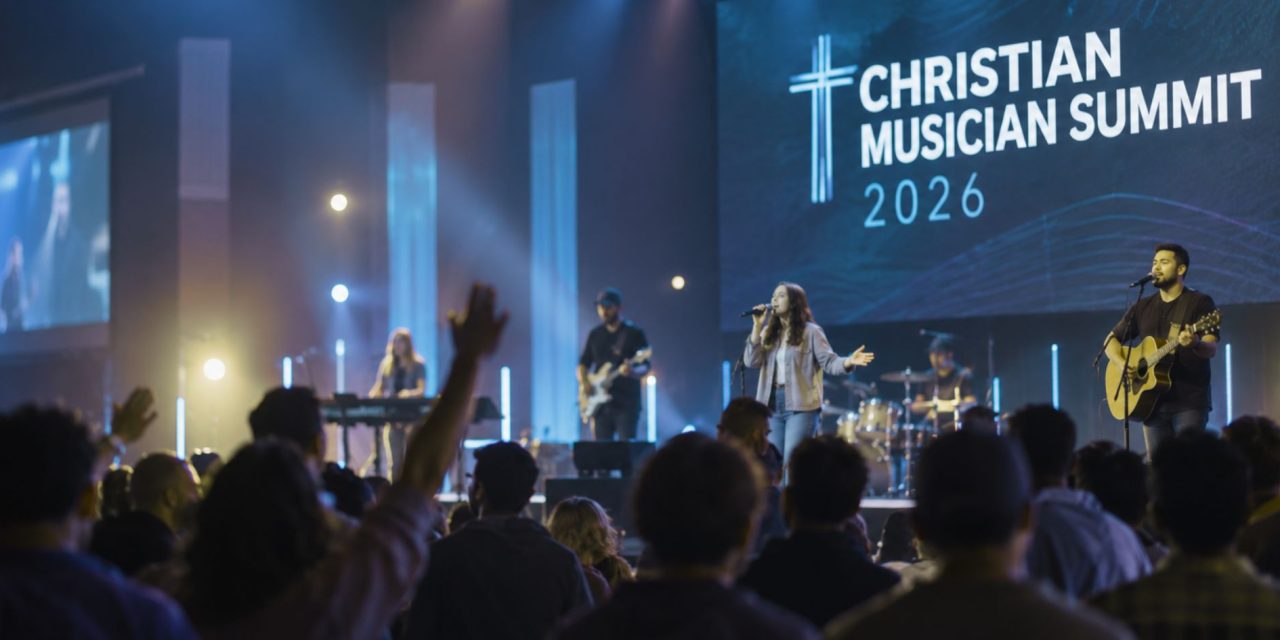
Worship teams rarely get many opportunities to develop their musical, technical, and leadership skills in one place. The Christian Musician Summit 2026 brings those areas together through training, worship, and connection with other Christian music professionals.
For a worship leader, musician, or technician, that range can make the Summit especially useful. Instead of trying to solve every rehearsal, sound, songwriting, or leadership question between Sunday services, you can learn from people who spend their careers working through those challenges.
The Summit takes place November 6–7, 2026, at Our Savior Lutheran Church in Tacoma, Washington. Separate intensives are scheduled for November 5, offering more focused training in areas including vocals, guitar, audio technology, keys, and bass.
The official 2026 workshop schedule is still being finalized, so teams should check the published program as the event approaches. What is already clear is the breadth of the Summit’s audience and its emphasis on practical development.
What the Christian Musician Summit 2026 Offers Worship Teams
The Christian Musician Summit is a training and networking event for worship leaders, musicians, technicians, pastors, songwriters, and independent artists. Its stated purpose is to provide practical training, resources, and opportunities for attendees to develop their skills and talents.
The 2026 main conference runs Friday, November 6, through Saturday, November 7. The published schedule includes opening worship and keynote sessions, breakout sessions, general sessions, an evening concert, and closing worship.
Separate intensives take place on Thursday, November 5. These currently include dedicated options for vocals, guitar, audio technology, keys, and bass, with separate registration required.
The full workshop schedule for 2026 has not yet been published. The official website says it will be posted in October, so attendees should avoid choosing sessions based on assumptions about the final program.
The range of training makes the Summit relevant to different members of a worship ministry.
A praise band can approach the event from several angles, while worship leaders and technical volunteers can focus on areas connected to their own responsibilities.
The Summit also provides opportunities for attendees at different skill levels to learn, network, and fellowship with other musicians and technicians.
That combination is useful because a worship service depends on more than the person holding the microphone.
A strong vocal team needs musicians who listen to one another. Musicians need arrangements that support the song. The worship leader needs communication with the band and technical team.
Even the best setlist can become considerably less impressive when nobody agrees on the tempo.
For teams considering what these events can offer more broadly, this overview of worship music workshops and conferences provides additional context on the learning and practical development they can offer.
Who Should Attend and Why It Matters for Your Ministry
The Summit identifies worship leaders, musicians, technicians, pastors, songwriters, and independent artists among its intended audience.
That makes the event relevant to more than the worship leader or lead vocalist.
Think about the different responsibilities within your team and where additional training could be useful.
- Worship leaders can explore leadership and musicianship while learning alongside other people serving in worship ministry.
- Vocalists can take advantage of the dedicated vocal intensive and other relevant sessions.
- Guitarists, bassists, drummers, and keyboardists can develop their instrumental skills through the available training and clinician sessions.
- Audio engineers can explore the dedicated audio technology intensive and other technical opportunities.
- Media and tech volunteers can look for sessions relevant to their production responsibilities.
- Songwriters can develop their craft while connecting with other Christian musicians.
The 2026 clinician lineup includes Paul Baloche, Canaan Baca, Zoro, Norm Stockton, Michael Hodge, Ed Kerr, Frank Montgomery, Renee Maranan, David Harsh, Kent Morris, Alex MacDougall, Doug Gould, Jeff Hawley, Jeff Barnett, Jason Squires, and RD Willis.
The November 5 intensives provide more specialized opportunities. David Harsh’s guitar intensive, for example, covers chord theory, rhythm and lead collaboration, grooves, strumming, and fingerpicking.
The audio intensive also brings together experienced professionals working in live sound, worship technology, education, and church production.
For a worship team, this variety means different members can pursue training that matches their responsibilities.
It can also give musicians and leaders opportunities to hear approaches that differ from what they encounter in their own church.
Where DLK Praise and Worship Fits Your Training Plan
DLK Praise and Worship offers editorial resources that can complement the kind of learning available through a Christian music conference.
The publication covers worship music, songwriting, musicianship, worship leadership, church music, worship events, congregational participation, and Christian music culture.
That gives worship leaders, musicians, and songwriters material they can return to beyond a single conference.
The Summit provides concentrated access to clinicians, musicians, technical professionals, and other attendees. DLK Praise and Worship provides an ongoing editorial resource for exploring related questions and ideas.
The two therefore serve different purposes.
One offers a concentrated event experience. The other gives readers continuing opportunities to engage with worship music, musicianship, songwriting, and ministry-related topics.
That combination can be useful for teams that want their learning to extend beyond one event on the calendar.
Editorial Resources for Worship Leaders, Songwriters, and Musicians
DLK Praise and Worship provides editorial resources for worship leaders, songwriters, musicians, and others involved in Christian music.
Its coverage includes worship songs, Christian artists, songwriting, musicianship, worship teams, music ministry, worship events, and practical church-music guidance.
That range matters because not every person on a worship team has the same training needs.
A worship leader may be thinking about congregational participation. A guitarist may be refining musicianship. A songwriter may be working through lyrics or composition.
Teams can use relevant content in several ways:
- Personal devotion: Reading about worship songs and their themes during personal reflection.
- Team training: Discussing practical worship guidance during rehearsals or team meetings.
- Song selection: Exploring worship-song discussions and artist coverage when considering setlists.
- Songwriting growth: Reading songwriting and musicianship content while developing original material.
The publication can also complement practical preparation for different worship settings.
For example, From Rehearsal to Revival: Preparing Your Worship Team for an Acoustic Night looks at preparing a team for an acoustic worship environment.
That kind of content gives worship teams another way to think about preparation, musicianship, and serving the congregation outside the conference environment.
The wider purpose is straightforward: give worship leaders, musicians, and songwriters useful material that supports their development and ministry.
Conclusion
The Christian Musician Summit 2026 brings together different parts of the Christian music community through training, worship, networking, and specialized learning opportunities.
For worship teams, its breadth is part of the appeal. Leaders, musicians, vocalists, technicians, and songwriters can each find opportunities relevant to their work.
The main conference runs November 6–7 in Tacoma, while separate intensives take place November 5. The 2026 workshop schedule is expected to be published in October.
What happens when the Summit is over and the real work begins on Sunday? DLK Praise and Worship will be there for the next part of the journey, exploring how worship teams can turn new ideas into stronger ministry.


