The final chord rings out, the drummer lifts his sticks, and then the worship leader gives the signal.
Nothing.
No guitar filling the gap. No keyboard holding the chord. And no drums quietly keeping everyone on track. Just a room full of people expected to keep singing.
That silence can be beautiful. It can also expose very quickly whether the congregation actually knows the song.
A cappella worship works because it changes the congregation’s role. When the instruments disappear, the voices are no longer sitting inside the arrangement. They become the arrangement.
But that does not mean every song needs an unaccompanied section. The moment works best when the song, key, congregation, setting, and musical preparation all support it.
This guide looks at why a cappella moments can work so well, when to use them, and what worship teams should consider before letting the instruments fall silent.
Why A Cappella Moments Work in Congregational Worship
There is a particular stillness that settles over a room when the instruments fall silent and only voices remain.
The drums stop. The guitars fade. The keyboard releases its final chord. Suddenly, the room sounds different.
What fills the space is not production but people, breathing and singing together.
That shift does something musically and spiritually. Without instruments providing rhythm, harmony, and volume, people become more aware of one another.
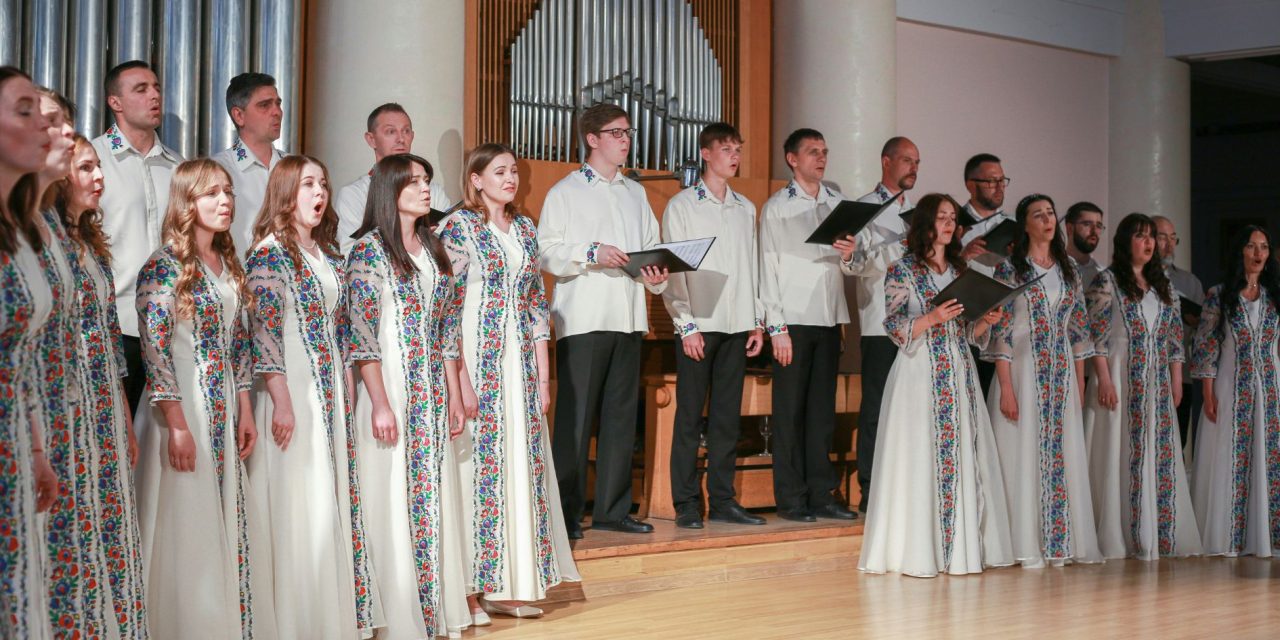
The congregation is no longer simply singing along with the band. The congregation is the sound.
That makes an a cappella moment especially powerful in congregational worship. Singing becomes visibly communal rather than something led from a platform while everyone else follows.
Ephesians 5:19 gives us this picture of believers speaking to one another through psalms, hymns, and spiritual songs. Singing is not merely a performance for people to hear. It is something believers do together.
This is also why simple participation choices can make such a difference. Creating space for the whole church to sing can shift a room from watching worship to actively joining it.
A cappella singing takes that principle even further because there is nowhere for the congregation to disappear behind the arrangement.
The moment can also create room for reflection. Without a driving band, the tempo may relax and familiar words can land differently.
That does not mean silence automatically produces a spiritual breakthrough. It simply creates space for people to listen, respond, and sing with greater attentiveness.
The goal is participation, not perfection.
When Should the Instruments Drop Out?
Not every song needs an a cappella section. Knowing when to strip the arrangement back is part of musical and pastoral judgment.
Start with the message of the song.
If the lyrics express confession, surrender, gratitude, or celebration, removing the instruments can allow those words to breathe. The musical reduction gives the congregation fewer things to listen to and more room to hear what they are singing.
This is part of a wider principle in worship arranging: sometimes adding less creates more space for participation. Thoughtful musical choices can help keep the congregation involved instead of turning them into an audience.
The congregation’s familiarity with the song matters too.
A well-known chorus or repeating refrain is usually a safer choice because people already know where the melody goes. A new song with a complicated entrance or unfamiliar harmony may need instrumental support.
The key matters just as much.
A song might sit comfortably for the worship leader but feel too high or too low for the congregation. When the band disappears, those uncomfortable ranges become much harder to hide.
Choose a key that allows the room to sing confidently rather than simply choosing the key that sounds best for the person holding the microphone.
The acoustics should also be considered. A resonant sanctuary may naturally carry voices, while a heavily carpeted room may absorb some of their sound.
There are several moments where an a cappella section can fit naturally:
- After communion, when the atmosphere is quiet and reflective
- During candle lighting or a prayer response
- As a transition into intercession
- During a familiar final chorus
- After the band has built intensity and the arrangement needs somewhere to breathe
The key is that the musical choice should serve what is already happening in the room.
Prepare the Moment, Not Just the Song
An a cappella section may sound spontaneous from the congregation’s perspective, but the team should not leave the transition to chance.
The worship leader needs to communicate clearly with the musicians. A raised hand, nod, breath, or simple spoken cue can tell the band when to stop.
The team should already know what happens after the instruments disappear.
Where does the congregation enter? Who establishes the melody? How long does the section continue? Does the band return, or does the song end with the voices?
These decisions do not need to make the moment rigid. They simply remove unnecessary uncertainty.
The same applies to the congregation.
If the song is familiar, people may naturally continue singing when the instruments stop. If the section is less familiar, the worship leader may need to establish the melody clearly before removing the support.
This is where preparation becomes important. The team should know the transition well enough that it feels natural rather than like everyone suddenly forgot what happens next.
Overuse is another concern.
If every service contains an a cappella section, the technique can quickly lose its impact. A moment that once felt unexpectedly intimate can become another predictable part of the arrangement.
Use it when the song and the room give you a reason to use it.
The best a cappella moments are not necessarily the loudest, most dramatic, or most technically impressive. They are the ones where removing the instruments helps the congregation become more aware of its own voice.
Conclusion
A cappella worship asks a congregation to carry the song together, and that vulnerability is part of its power.
The right song, a comfortable key, a familiar melody, suitable setting, and clear preparation can turn the absence of instruments into a meaningful moment of participation.
The goal is not to prove that the worship team can survive without a band. It is to create enough space for the church to hear itself sing.
What makes one small musical change draw the congregation in while another leaves them wondering what just happened? DLK Praise and Worship looks at how simple choices in an arrangement can shape the way a church experiences worship.


