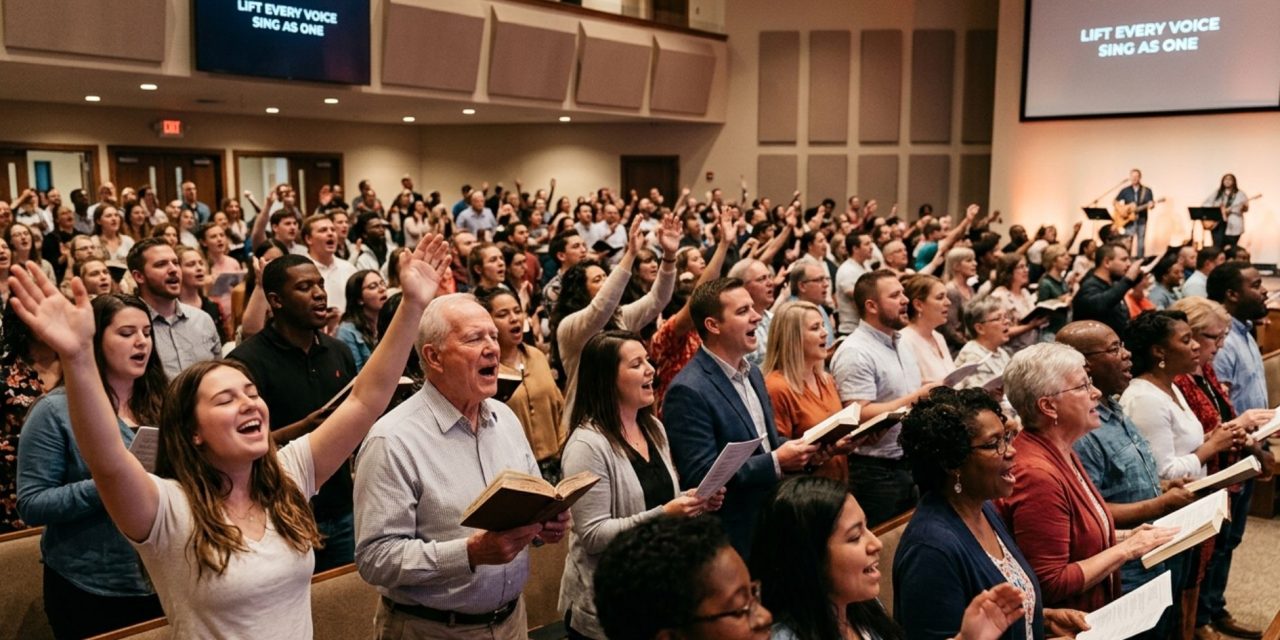
Some worship songs barely make it through a few Sundays before quietly disappearing from the setlist. Others seem almost impossible to retire. Years—even decades—later, entire congregations still sing every word without looking at the screen.
That kind of staying power isn’t accidental. While powerful lyrics matter, the music itself often determines whether a church confidently joins in or politely listens. From natural breathing spaces to memorable melodies and emotionally satisfying resolutions, the most enduring congregational worship songs are carefully built for participation long before they’re built for performance.
Breath-Friendly Phrasing
One overlooked reason some songs feel effortless to sing is the way they’re phrased. Worship songs that naturally allow the congregation to breathe together keep people engaged instead of leaving them gasping halfway through a verse.
Many worship writers build phrases around four-bar sections, creating natural breathing points without interrupting the musical flow. Getty Music publications frequently include breath mark notation that helps worship leaders and choirs maintain these comfortable phracing patterns.
Simple practices that improve singability include:
- Ending phrases after four bars whenever possible.
- Giving singers brief rests before the next lyric begins.
- Keeping syncopation limited so the melody feels predictable.
- Avoiding overly long lyrical lines that require excessive breath control.
Songs such as Revelation Song demonstrate how thoughtful phrasing helps large congregations stay together. Whether accompanied by piano, acoustic guitar, or a full band, these breathing spaces make participation feel natural instead of demanding.
Emotional and Spiritual Resonance
Great worship songs do more than sound good—they invite people into a shared emotional experience.
One of the clearest signs that a song is connecting is the spontaneous swell of congregational voices during the chorus. Nobody announces it. Nobody asks people to sing louder. It simply happens.
Several musical choices encourage that response:
- Major-key resolutions that naturally create a sense of hope.
- Melodies that rise with lyrics celebrating God’s goodness.
- Dynamic arrangements that build gradually rather than relying on sudden musical surprises.
- Choruses that are memorable enough to sing after hearing them only once or twice.
Songs like Graves Into Gardens illustrate this beautifully. Instead of manipulating emotion through production alone, the arrangement steadily builds until the congregation instinctively joins with greater confidence and conviction.
The goal isn’t creating emotional hype. It’s creating musical space where authentic worship can flourish naturally.
Conclusion
The most enduring congregational worship songs succeed because they’re written with the church in mind from the very beginning. Comfortable phrasing, memorable melodies, and emotionally honest musical movement help entire rooms sing as one instead of simply listening.
When music removes unnecessary barriers, worship becomes less about the platform and more about the people lifting their voices together.
The songs that stay with a congregation for years are rarely accidental—they’re carefully crafted to serve the Church. Discover more insights into worship leading, songwriting, and the music shaping today’s churches at DLK Praise and Worship.