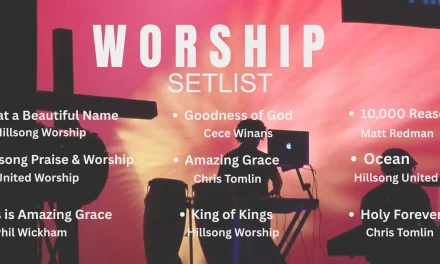
Rehearsal starts in ten minutes, but the setlist is still making its way through the group chat. One musician is asking for the key, someone else needs the chord chart, and the worship leader is wondering whether everyone heard about the new arrangement.
None of these questions is difficult. The problem is that they are arriving when rehearsal should already be starting. A clear preparation packet moves those details out of rehearsal and into the days before it, giving everyone the songs, keys, arrangements, roles, schedule, and spiritual focus they need.
That means less time spent playing detective and more time actually rehearsing. This guide shows you what to include and how to turn those details into a simple packet your team can rely on before every rehearsal.
Why a Preparation Packet Beats Last-Minute Group Chats
When a worship team relies on a flurry of texts and voice notes the night before rehearsal, details disappear quickly. Keys get guessed, song orders change, and someone eventually asks a question that was answered three messages ago.
A preparation packet sent several days ahead gives everyone the same information. Team members can review the setlist, understand their parts, prepare musically, and arrive knowing what the rehearsal requires.
That changes the purpose of rehearsal. Instead of spending the first part of the evening figuring out what everyone is supposed to be doing, the team can focus on working through the music and preparing to serve the congregation.
Three benefits stand out.
First, confusion drops because everyone is working from the same information. Second, rehearsal time is used more effectively because musicians and vocalists arrive prepared. Third, the team has more space to approach the gathering prayerfully and with focus.
Preparation is a form of service. Good preparation does not make worship mechanical. It removes avoidable distractions so the team can concentrate on ministry.
What Belongs in Every Pre-Rehearsal Packet
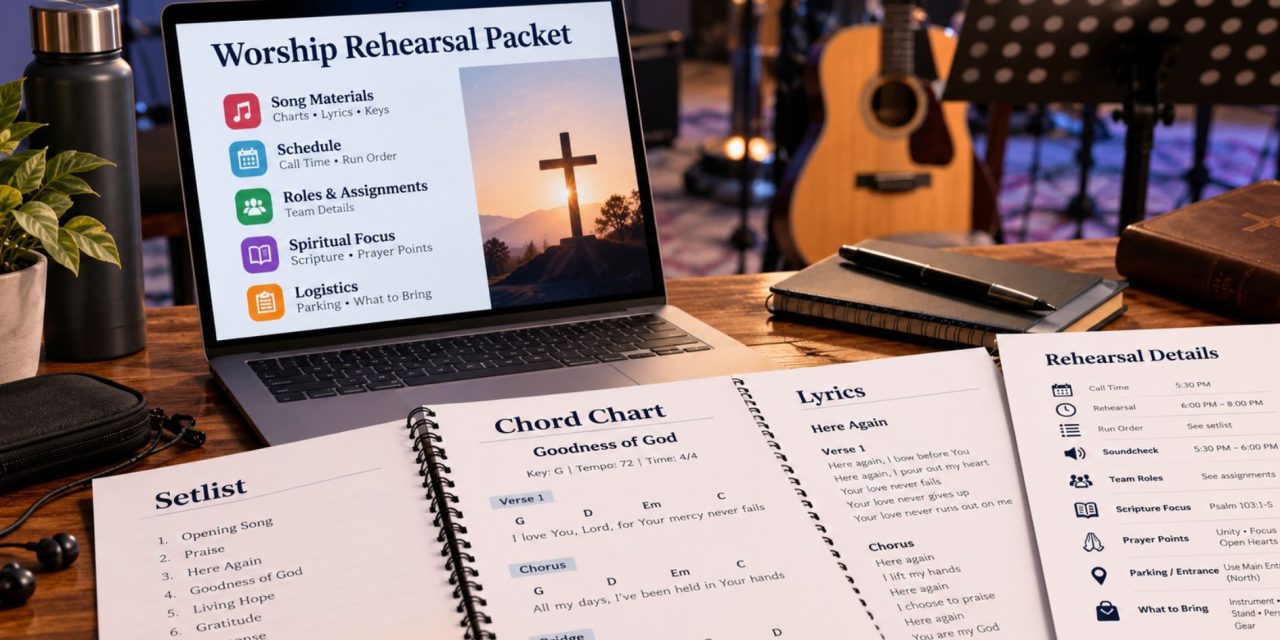
A complete pre-rehearsal packet typically includes five categories: song materials, schedule details, role assignments, spiritual focus, and practical logistics.
Send it at least four to five days before rehearsal whenever possible. This gives musicians time to practice and gives the team an opportunity to raise questions before rehearsal begins.
Song materials form the core. Include chord charts, lyric sheets, and lead sheets for every song. Clearly mark the key, tempo, time signature, and important arrangement notes.
If your team uses the Nashville Number System, include those charts alongside traditional notation where useful. Digital packets can also include links to reference recordings, helping singers and instrumentalists understand the intended feel before rehearsal.
Schedule details keep the evening moving. Include the call time, rehearsal start and end times, run order, and any transitions or medleys. Note when soundcheck happens and when the tech team needs to be ready.
Role assignments remove guesswork. Specify who leads each song, which vocalists handle harmonies, and which instrumentalists carry specific parts. Include responsibilities for the sound engineer, media team, and person handling lyric presentation through ProPresenter.
Spiritual focus grounds the gathering. Add a short Scripture passage and two or three prayer points connected to the service theme. This keeps preparation connected to the ministry behind the music.
Practical logistics complete the packet. Include parking instructions, the entrance to use, arrival details, and anything team members need to bring. That could include water, a music stand, or a specific instrument.
A simple packet can therefore cover:
- Song materials: chord charts, lyric sheets, lead sheets, keys, tempo, time signature, arrangement notes, reference recordings
- Schedule: call time, rehearsal start and end, run order, transitions, medleys, soundcheck timing
- Roles: worship leader, vocalists, instrumentalists, sound engineer, media team, projectionist
- Spiritual focus: Scripture passage, prayer points, service theme
- Logistics: parking, entrance, arrival details, and what to bring
The exact format can vary between churches. What matters is that everyone receives the information early enough to use it.
A preparation packet also serves the whole team, from the praise band to the choir rehearsal room. It creates a shared starting point before anyone plays the first note, which is considerably better than discovering the setlist together at rehearsal.
Conclusion
A good rehearsal does not begin when the first chord is played. It begins when the team receives enough information to arrive prepared.
The preparation packet does not need to be complicated. It needs to be clear, timely, and useful to the people who will actually use it.
And sometimes, that simple change can save the team from spending half the rehearsal asking, “Wait, what key are we doing this in?”
What else can make a worship rehearsal run smoother before the first note is played? Stay with DLK Praise and Worship for more practical guidance as we dig deeper into the preparation strategies behind stronger worship teams.