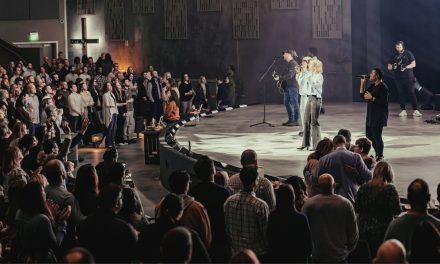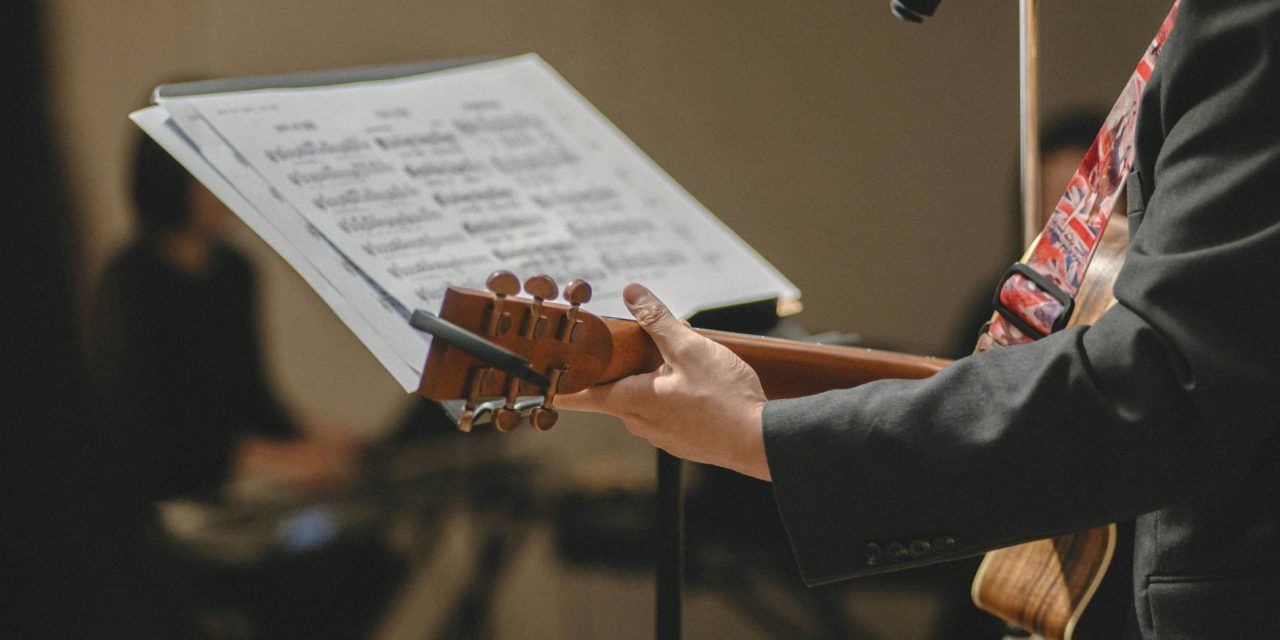
The worship set is ready until the vocalist asks for one song to be moved down a step. Suddenly, the guitarist is checking the capo, the pianist is changing chords, and someone is asking which chart everyone should use.
One key change, three musicians, and somehow the chord chart has become the evening’s main character.
The problem is not the key change itself. Traditional chord charts are built around specific chord letters, so changing the key can mean changing the chart too. That becomes frustrating when worship teams need to adjust songs for different singers, services, or spontaneous moments.
The Nashville Number System offers a simpler approach. By showing chords according to their position within the key, numbers can stay the same even when the actual key changes. This explainer breaks down how the system works and how worship teams can use it to chart and play songs more flexibly.
What the Nashville Number System Is and Why Worship Teams Use It
The Nashville Number System is a shorthand method that replaces chord letter names with numbers based on the scale. Instead of writing G, C, and D, a chart can use 1, 4, and 5.
The song’s structure remains the same even when the key changes. That makes the system particularly useful for worship teams, where vocal range, song arrangements, and service needs can sometimes require last-minute adjustments.
The system developed from Nashville recording sessions in the 1950s. Studio musicians needed to learn songs quickly and accommodate key changes without constantly rewriting charts.
That same efficiency translates well to worship settings. A vocalist may need a lower key, or a worship leader may decide that a different key fits the congregation better. With number charts, the progression itself does not need to be rewritten.
For guitarists, familiar chord shapes can remain useful when a capo changes the sounding key. Keyboardists can shift the progression into a different range, while other instrumentalists can adapt the same harmonic structure.
The system can also strengthen musicianship over time. Players begin thinking about how chords relate to one another rather than treating every chord as an isolated shape.
That awareness can support stronger chord voicing, modulation, listening, and communication during team rehearsals. It also fits naturally alongside the kind of musical preparation explored in this guide.
The following sections explain how the numbers relate to the scale and why one chart can work across multiple keys.
Numbers Instead of Letters: The Core Idea
In the Nashville Number System, each number represents a scale degree in the key. A 1 represents the tonic, while 4 represents the subdominant and 5 represents the dominant.
The major scale contains seven notes, and each note can support a chord built from it. This creates a system of relationships known as diatonic harmony.
In the key of G, the 1 chord is G, the 4 chord is C, and the 5 chord is D. Therefore, a 1-4-5-1 progression becomes G-C-D-G.
Move the song to C, and the same progression becomes C-F-G-C. The numbers stay the same while the chord names change.
Numbers can also communicate chord quality and movement. A plain number generally represents a major triad, while a dash can indicate a minor chord.
A 7 after a number indicates a seventh chord, while a slash such as 5/7 can indicate a slash chord with a specified bass note. These symbols allow a compact chart to communicate considerable musical information.
Because the system is concise, it can work particularly well during team rehearsals and live settings. A music director can communicate a progression using numbers without everyone needing a completely new chart.
Many worship teams use number charts alongside traditional lead sheets. The two approaches do not have to compete. Instead, numbers can provide another way for musicians to understand and communicate the same musical structure.
Why One Chart Works in Any Keys
The key idea is relativity. Because the numbers describe relationships within a key, the same chart can be played in different keys without rewriting every chord.
To transpose the progression, identify the new key and map each number to its corresponding scale degree.
A 1-4-5 progression in C becomes C-F-G. In D, it becomes D-G-A. In E, it becomes E-A-B.
The progression has not changed. Only the pitch level has moved.
That flexibility can be particularly useful for worship teams.
- Vocalists can choose a key that suits their range without requiring an entirely new chart.
- Guitarists can use a capo while retaining familiar chord shapes.
- Keyboardists can move progressions quickly when keys change between services.
- Transposing instruments such as saxophones and trumpets can work from the same harmonic relationships while accounting for their own pitch.
- Music directors can manage different vocal keys without maintaining a separate chart for every possible version.
The system can also make modulation easier to communicate. If the final chorus moves upward, the team can think through the numerical relationship rather than scrambling to rewrite the entire chart.
Over time, this way of thinking can train musicians to recognise intervals and chord functions by ear. A player begins to hear the role of a 4 chord regardless of whether the chorus is in C, D, E, or another key.
That understanding becomes useful beyond charts. It can support communication, arrangement decisions, and the small musical choices that can shape a worship moment.
For a team, the real value is not simply having a faster way to write chords. It is having a shared musical language that makes changing keys and communicating musical ideas less complicated.
Conclusion
The Nashville Number System is more than a shortcut for writing chords. It gives worship teams a flexible way to understand, chart, and adapt songs when the key changes.
Once musicians understand how the numbers relate to the key, one chart can serve different singers, instruments, and arrangements without starting from scratch each time. That makes rehearsals smoother and gives the team more freedom when musical changes happen.
What happens when a worship team can change a song’s key without turning rehearsal into a chart-rewriting session? DLK Praise and Worship explores more practical ways to help worship teams prepare, adapt, and make stronger musical choices together!