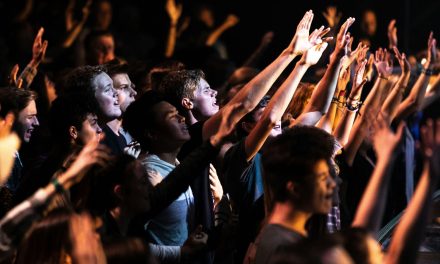
There is something powerful about thousands of voices singing as one… yet the real impact of worship is often measured in the quiet, personal moments it creates. That tension sits at the heart of modern large-scale worship.
As post-pandemic live events continue to grow, worship gatherings are reaching stadium-level audiences. This piece explores the practical challenge behind that growth: how worship leaders maintain intimacy, connection, and spiritual depth in environments built for scale.
The Challenge of Scaling Worship
Moving worship from small rooms to massive arenas introduces real tension. Events led by groups like Hillsong Worship show that large gatherings can still create meaningful spiritual moments, but it requires intentional design.
Several challenges emerge in these settings. High volume levels can overpower quieter, reflective moments, making it harder for individuals to engage personally. Physical distance also plays a role, as those seated far from the stage may feel disconnected from what is happening.
Production adds another layer. While lighting, visuals, and effects can enhance the experience, they can also shift focus away from worship if overused. Artists like Elevation Worship have openly reflected on the need to balance production with authenticity.
To address this, many leaders aim to recreate a “small room” feel within a large space. This involves careful control of sound, pacing, and visual elements to support, rather than dominate, the worship moment.
Stadium Crowds vs. Heart Connection
Large crowds create energy, but they also introduce a risk of passive participation. Songs like What a Beautiful Name can unite thousands in a single moment, yet some attendees may still feel like observers rather than participants.
Key tensions often appear in these environments:
- Volume vs. vulnerability: High sound levels can drown out quieter expressions like prayer or reflection
- Lighting vs. connection: Intense visuals may limit eye contact and personal engagement
- Scale vs. surrender: Large spaces can make response moments feel distant or less immediate
Events such as those led by Passion Conference demonstrate how these challenges can be addressed. Extended moments of stripped-back worship or even silence have been used to refocus attention and create space for personal response.
Worship leaders like Chris Tomlin often incorporate simple, repeatable choruses and intentional pauses to bring the focus back to participation. These adjustments help shift the experience from performance to shared worship, even in large venues.
Conclusion
Scaling worship is not just about reaching more people; it is about maintaining the depth of connection within a larger space. The balance between energy and intimacy requires careful planning, thoughtful leadership, and a willingness to simplify when needed.
When done well, large gatherings do not lose their personal impact. Instead, they create moments where thousands can gather, yet still experience worship in a deeply individual way.
Do you find it easier to truly engage in worship when it’s just a small group, or have you had a moment in a big crowd that still felt deeply personal?
Let us know in the comments and keep learning how to lead worship that connects in every setting DLK Praise and Worship!