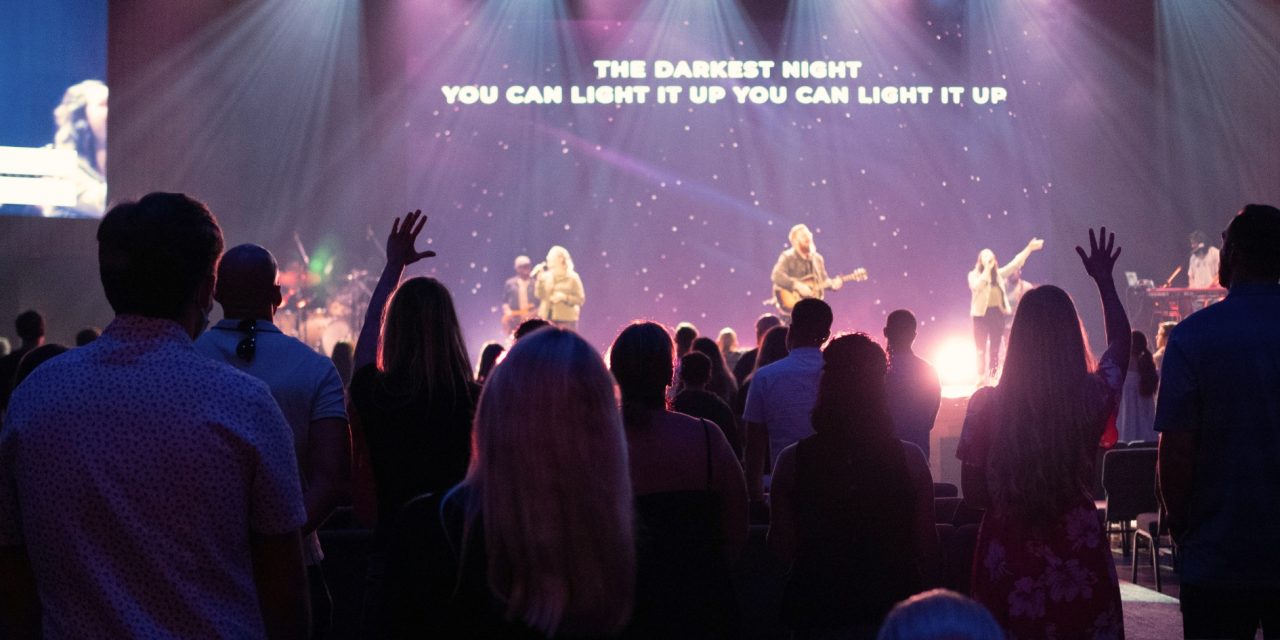
If you’ve followed the first two parts of this series, you’ve already seen that timeless worship isn’t defined by when a song was written. It’s defined by whether God’s people are still singing it decades later.
Part 3 continues that journey, exploring three more worship songs whose message has outlasted changing musical styles, shifting church cultures, and countless new releases. Each one reminds us that truth never goes out of season.
8. The Old Rugged Cross
Few hymns have survived more than a century while still moving congregations as deeply as The Old Rugged Cross.
George Bennard wrote the hymn in 1913 after facing criticism for preaching a message centered on Christ’s crucifixion. Rather than softening his convictions, he turned them into one of Christianity’s most enduring songs. The hymn was first introduced during revival meetings associated with evangelist Billy Sunday before spreading to churches across America and eventually around the world.
Its simple 6.6.7.6 meter and unforgettable refrain make it remarkably easy for congregations to sing together. Each verse builds naturally toward the familiar declaration:
“I will cherish the old rugged cross.”
That repeated commitment gives the hymn its emotional weight, making it especially fitting during communion services, Good Friday gatherings, altar calls, and Easter celebrations.
Although originally written for traditional congregations, today’s worship teams often present it with piano, acoustic guitar, strings, or gentle contemporary arrangements while preserving its timeless message of redemption.
For worship leaders, pairing The Old Rugged Cross with Scripture readings about Christ’s sacrifice can create a particularly meaningful moment of reflection before transitioning into songs celebrating the resurrection.
9. In Christ Alone
Few modern worship songs have earned the status of a hymn as quickly as In Christ Alone.
Written by Keith Getty and Stuart Townend in 2001, the song bridges traditional hymn writing with contemporary worship while remaining firmly rooted in biblical doctrine. At a time when many worship songs favored repetition, In Christ Alone stood apart by telling the complete story of the gospel—from Christ’s birth to His death, resurrection, and ultimate victory.
Its theological richness wasn’t universally welcomed at first. Some publishers questioned certain lyrics about the cross and atonement, even requesting revisions. The writers declined, choosing to preserve the song’s original message rather than compromise its biblical convictions.
Structurally, the hymn is equally distinctive.
Instead of relying on a repetitive chorus, it unfolds through four continuous verses that steadily develop the gospel narrative. That format encourages congregations to reflect on Scripture while singing rather than simply repeating a single refrain.
More than two decades later, In Christ Alone remains one of the world’s most frequently sung worship songs, appearing regularly in church services, conferences, and worship gatherings across denominations.
Its lasting influence proves that congregations still embrace songs that combine beautiful melodies with clear biblical truth.
10. 10,000 Reasons (Bless the Lord)
Some worship songs become popular for a season.
Others quietly become part of the Church’s regular vocabulary.
Matt Redman’s 10,000 Reasons (Bless the Lord) has done exactly that.
Released in 2011 and inspired by Psalm 103, the song quickly became one of the defining worship anthems of the twenty-first century. Its central idea is beautifully simple: no matter what life brings, God’s faithfulness gives believers countless reasons to continue praising Him.
The repeated refrain,
“Bless the Lord, O my soul,”
has become instantly recognizable in churches around the world, making the song easy for both new believers and lifelong Christians to sing with confidence.
Its accessible melody allows worship teams to present it in many different settings, from intimate acoustic gatherings to full-band Sunday services. Whether led by a solo guitarist, choir, or contemporary worship band, the song consistently creates space for heartfelt corporate worship.
More than a decade after its release, 10,000 Reasons continues to unite generations of worshippers, proving that modern songs can become timeless when they remain deeply rooted in Scripture.
Conclusion
Great worship songs don’t simply survive because they’re familiar—they endure because they faithfully point people back to Christ.
Whether it’s the unwavering hope of The Old Rugged Cross, the rich theology of In Christ Alone, or the overflowing gratitude found in 10,000 Reasons, these songs continue to lead congregations into genuine worship generation after generation.
As worship styles evolve, these enduring hymns and modern classics remind us that timeless worship is ultimately built on timeless truth.
If you could preserve just one worship song for future generations, which would it be—and why? Join the conversation with DLK Praise & Worship and tell us which timeless anthem has most shaped your faith journey.