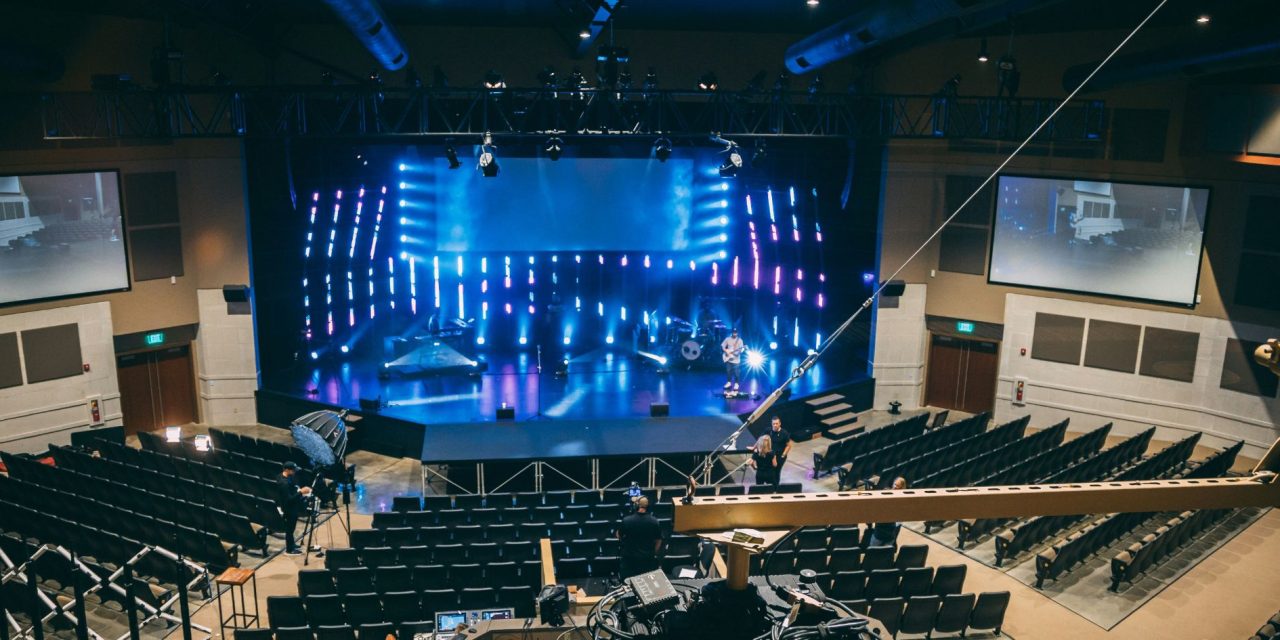
The first thing people notice at an acoustic worship night might be the music. The second might be how difficult it suddenly becomes to find their seats when the lights go down.
Creating a welcoming atmosphere requires a little more thought than dimming the switches. Lighting should complement the quieter sound, support moments of prayer and reflection, and keep the space comfortable and safe. A beautiful atmosphere is helpful, but nobody should need night vision to worship.
Lighting and Ambiance
Lighting influences how people experience a space. Bright overhead lights can feel functional, while softer lighting may support a quieter atmosphere.
However, no specific lux level guarantees intimacy or deeper worship. Brightness depends on the sanctuary’s size, layout, activities, and safety requirements.
A church’s acoustic night should remain bright enough for people to move safely, read lyrics, see faces, and respond to emergencies.
Warm lighting around 2700K can create a candlelight-inspired appearance. However, colour temperature alone does not produce spiritual intimacy.
The best approach combines thoughtful lighting, comfortable visibility, and an arrangement suited to the evening’s purpose.
Creating a Warm Lighting Arrangement
A simple setup can combine LED candles with adjustable spotlights or uplights. Battery-powered LEDs are often more practical than open flames in busy worship spaces.
Consider the following arrangement:
- Worship area: Place LED tea lights around the worship leader’s stool or guitar setup.
- Side lighting: Use two adjustable LED lights to illuminate musicians gently.
- Congregation: Ensure worshippers can see lyrics, faces, and walkways.
- Transitions: Maintain suitable lighting for Scripture reading, testimonies, and prayer.
Products such as Philips Hue Go or other portable LED lights may offer flexibility. Compare brightness, battery life, durability, and cost before purchasing.
The number of lights should depend on the venue. A small room may need fewer fixtures, while a large sanctuary may require additional lighting.
Creating Intimate Worship Through Ambiance
A quieter visual environment can reduce distractions during acoustic worship. With fewer competing lights, listeners may focus more easily on the music, lyrics, and worship leaders.
However, dim lighting does not automatically improve participation. Some congregants may find dark spaces uncomfortable or struggle to read.
Church leaders should aim for atmosphere without sacrificing accessibility. Soft lighting can support acoustic guitar sets, a cappella hymns, Scripture reading, and testimony sharing.
Supporting Congregational Singing
Lighting should help worshippers see the people around them. Completely darkening the sanctuary may create distance rather than connection.
Gentle illumination allows people to follow lyrics, observe the worship leader, and participate without harsh stage lighting.
For youth worship or family gatherings, a warm setup may feel inviting. The lighting should still accommodate children, older adults, and people with visual sensitivities.
Safety and Practical Setup Tips
Safety should guide every lighting decision, especially when using candles around fabric, electrical equipment, and people.
Battery-powered LED candles are generally safer than open flames for church acoustic nights. They offer a similar visual effect without the same fire risks.
If real candles are used, leaders should follow venue safety requirements and obtain approval from the responsible personnel. Suitable holders, stable surfaces, supervision, and an emergency plan are essential.
A three-foot clearance should not be treated as a universal safety guarantee. Required distances depend on the candle, surroundings, venue policies, and applicable guidance.
Practical Safety Checklist
- Keep candles away from clothing, curtains, cables, and other flammable materials.
- Avoid placing flames in busy walkways.
- Check for drafts from doors, windows, and ventilation systems.
- Keep emergency equipment accessible where required.
- Test LED lights, cables, and batteries before the service.
- Keep exits, stairs, and walkways clearly visible.
- Brief volunteers on setup and emergency procedures.
Conclusion
Lighting can influence the atmosphere of an acoustic worship night, but it should never become the main attraction.
Warm LEDs, carefully positioned spotlights, and ambient lighting can create a welcoming environment. The setup must still support visibility, accessibility, and safe movement.
Church leaders should test arrangements, listen to feedback, and adapt lighting to the venue. A beautiful atmosphere means little if someone cannot read the lyrics or find the exit.
The best lighting plan quietly supports the music, message, and people gathered together.
Have you ever been ready to settle into worship, only to find the lighting too harsh or the room too dark? DLK Praise and Worship looks at the practical details that help acoustic worship nights feel warm, welcoming, and focused.