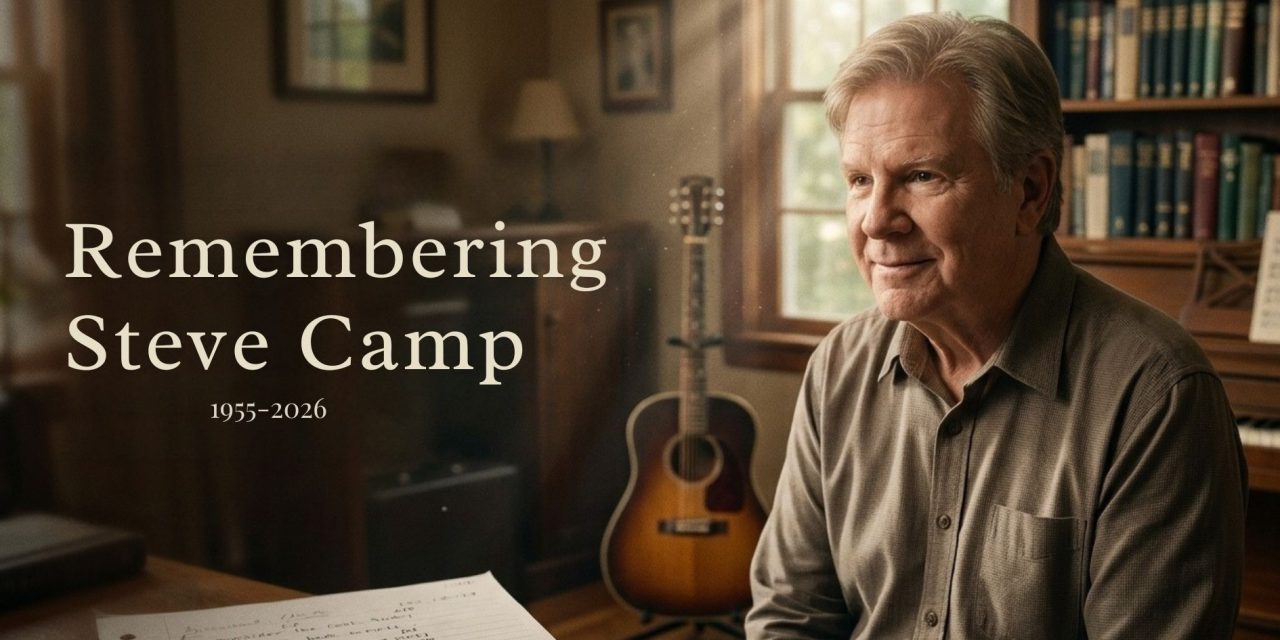
Steve Camp, the contemporary Christian singer, songwriter, and pastor, died on November 11, 2026. His family announced the news in a statement published by CCM Magazine on November 13. The Gospel Music Association also reported his passing.
His musical legacy offers Christian songwriters an opportunity to revisit an important question. What should a song ask of the people who hear it? Camp’s 1991 Sparrow album Consider the Cost provides a useful starting point. Its title directs attention beyond inspiration toward discipleship, commitment, and the demands of following Christ.
For writers, this raises a practical challenge: how can music communicate demanding spiritual truths without losing clarity, musical appeal, or emotional connection?
Start With What the Song Is Asking
Camp’s official discography lists Consider the Cost as a Sparrow release. The album remains available for listening.
Even the album title offers a meaningful songwriting prompt. It points toward the responsibilities of discipleship rather than encouragement alone. Following Christ involves commitment, and Christian music can explore that reality without reducing it to a comfortable message.
For songwriters, the first exercise is identifying the central idea before polishing the chorus. Try describing the message in one sentence. Then examine each verse in sequence.
Does every verse develop the central thought? Does each section give the listener another reason to consider the chorus? Or does a verse introduce an entirely different subject?
These questions help writers distinguish between a focused song and one carrying too many competing ideas. A strong central message gives the lyrics direction and helps listeners follow the songwriter’s intended progression.
Give a Demanding Message a Musical Form
In a 1992 interview with Cross Rhythms, Camp discussed the influence of Keith Green. He spoke about biblical grounding and musical appeal as qualities that could work together.
That perspective offers a useful challenge for Christian songwriters. A serious spiritual message doesn’t automatically require complicated lyrics or an inaccessible melody. Musical appeal and theological substance can support each other.
One practical way to test this balance is to sing a song using just one instrument. Listen carefully to where the melody places its emphasis. Does it highlight the important words, or does it place unnecessary weight on weaker syllables?
Also consider the phrasing. Does the melody allow enough room to breathe after a central thought? Can listeners understand the message without struggling through awkward lyrical construction?
If a line feels uncomfortable, revise it and sing it again. The arrangement can strengthen the message, but the lyrics and melody should already communicate clearly.
Write With the Listener’s Response in Mind
A recorded song can invite listeners to reflect on a challenging spiritual idea. However, not every Christian song needs to function as congregational worship.
That distinction matters when considering songwriting choices. A reflective piece may serve its purpose through careful listening. A song intended for congregational use must also give people a practical way to participate.
If you’re writing for corporate worship, test the chorus with a small group. Let them hear it once or twice before asking them to sing along. Notice where they hesitate, enter late, or struggle with the phrasing.
Then ask what they understood the song to communicate. Their responses may reveal an unclear phrase, an awkward entrance, or a message that needs further development.
Sometimes, the solution is a simpler chorus or a clearer lyrical expression. Other times, the song may work better as a listening piece than as a congregational selection.
The important thing is understanding the purpose before deciding how the song should be used.
Let Discipleship Shape the Writing
Camp’s family remembered a life that connected music with ministry. His work offers Christian songwriters an opportunity to reflect on the relationship between artistic expression and spiritual responsibility.
Consider the Cost provides a particularly relevant starting point because its central idea challenges listeners to look beyond inspiration. Christian songwriting can encourage, comfort, and celebrate, but it can also invite reflection and examine the demands of discipleship.
For today’s writers, the challenge is to communicate those truths with both conviction and clarity. Every lyric should contribute to the song’s purpose, while its musical structure should help listeners engage with the message.
Remembering Steve Camp means revisiting the questions behind the music. What are we asking listeners to consider? Does the song communicate that message faithfully? And have we given them something meaningful to carry beyond the final note?
How can Christian songwriting move beyond inspiration to encourage deeper discipleship and meaningful service? Explore more Christian music reflections, worship resources, and ministry features on DLK Praise and Worship.