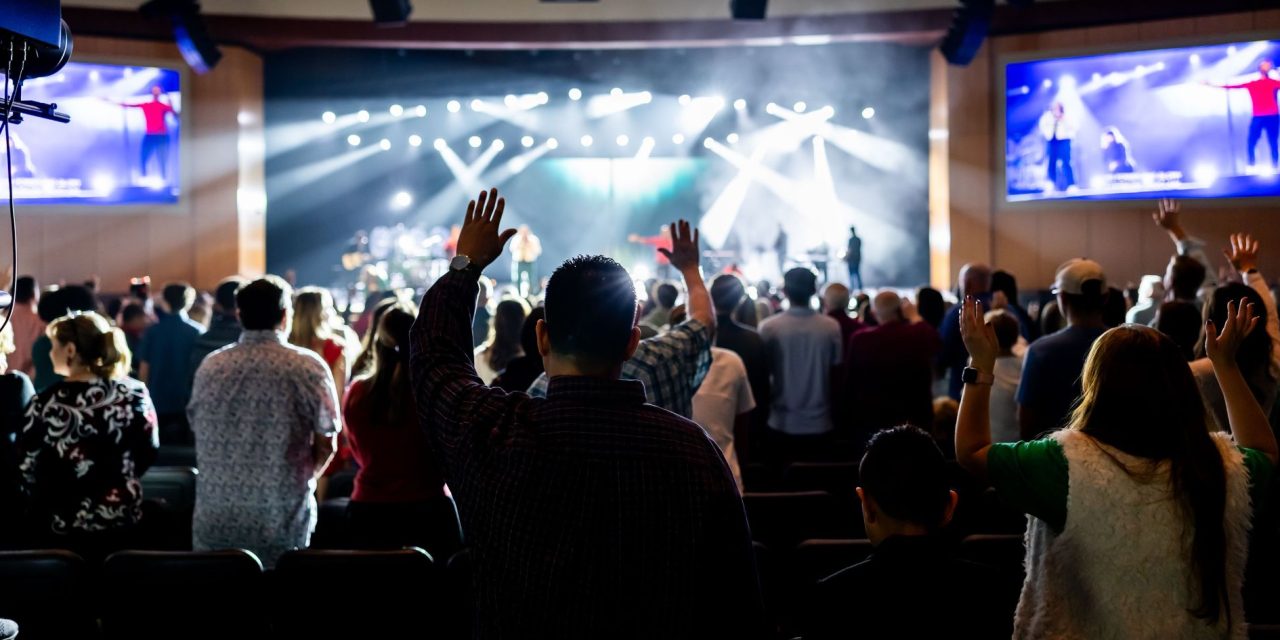
A growing church creates a strange tension. More people can mean a bigger worship sound, but bigger does not always mean more personal.
A room that once felt intimate can eventually hold thousands. The challenge is keeping worship from becoming a polished production where people watch instead of participate.
Churches such as Bethel Church have explored ways to preserve personal encounter while their congregations expand. Their approach points to a larger question for sustaining intimacy in worship: how do you scale the gathering without scaling away the heart of worship?
Sustaining the Balance Long-Term
Growth changes almost everything around a worship gathering. More people require more musicians, more planning, larger spaces, and stronger production systems.
Yet the central experience can remain personal. That requires intentional practices rather than simply hoping intimacy survives as attendance increases.
Bethel Church has maintained intimate worship experiences while growing from hundreds of attendees to much larger weekly gatherings. The broader lesson is that churches can deliberately evaluate whether people still feel engaged and connected during worship.
Six sustainability practices can help protect that balance.
- Quarterly worship audits can use participation surveys to understand congregational singing and the perceived worship experience.
- Leadership rotation introduces different worship leaders and musicians instead of relying on the same voices for every gathering.
- Song rotation policies can prevent familiar songs from becoming overused while creating space for newer selections.
- Small group integration brings worship into smaller settings where conversation, prayer, and participation feel more personal.
- Staff spiritual formation gives worship leaders dedicated opportunities for prayer, reflection, and spiritual renewal.
- Metrics dashboards can organize practical feedback, including response rates and participation patterns during live worship.
None of these practices replaces the spiritual purpose of worship. They simply create structures that help churches notice when growth begins affecting participation.
That distinction matters. A large worship service can still feel deeply personal when people are given room to sing, pray, respond, and encounter God rather than simply observe the platform.
Elevation Worship’s 3-Year Case Study
Elevation Worship offers another useful example of worship operating within a rapidly expanding church environment. As Elevation Worship grew alongside Elevation Church, larger gatherings brought new demands for the worship team.
The practical challenge was familiar. How do you preserve the atmosphere of a smaller church gathering when the room keeps getting bigger?
Quarterly evaluation and leadership rotation can help worship teams respond to that challenge. Different voices bring freshness, while regular feedback can reveal whether congregants remain active participants.
Song rotation can serve a similar purpose. A setlist should not become so predictable that people simply wait for familiar moments. At the same time, constant novelty can make worship feel disconnected from the congregation.
Smaller worship gatherings provide another important counterbalance. House worship nights, growth groups, and other intimate settings give people opportunities to worship without the scale and production of a major service.
Spiritual formation also matters behind the scenes. Worship leaders are not simply performers managing a large stage. Their own spiritual health can influence how they approach leadership, prayer, musicianship, and congregational participation.
The result is a more sustainable growth model. Large gatherings can provide collective energy, while smaller settings preserve relational connection. Production can support worship without becoming the experience itself.
Conclusion
Church growth does not automatically have to make worship feel distant. The bigger challenge is recognizing when scale begins changing participation, connection, and spiritual focus.
Regular feedback, rotating leadership, thoughtful song choices, smaller gatherings, spiritual formation, and simple measurement can help churches respond before distance becomes the norm.
The goal is not to make large worship feel artificially small. It is to make sure thousands of people can still feel invited to participate, rather than simply invited to watch.
When a worship gathering grows from a room into an arena, what keeps people from becoming spectators? DLK Prase and Worship looks at the practices that help large-scale praise remain personal, participatory, and centered on God.