There was a time when worship music sounded beautifully unpolished. You could hear the congregation, the room echo, and occasionally that one uncle singing an entirely different key with full confidence. Somehow, it still worked.
Then modern worship discovered production. Suddenly churches had ambient synth pads, cinematic drum builds, vocal tuning, and enough reverb to make the book of Leviticus sound emotional. Ministries like Hillsong Worship and Elevation Worship helped push worship into a massive new era where songs were built not just for sanctuaries, but for arenas, playlists, and global streaming audiences.
The Shift From Live Worship to Stadium Sound
As worship music expanded globally, ministries began moving away from simple live recordings toward highly produced arrangements designed for larger audiences and streaming platforms.
Groups like Bethel Music and Jesus Culture pushed this shift further through multi-layered live albums filled with atmospheric synths, ambient guitars, vocal stacks, and cinematic transitions.
The sound of worship started blending:
- contemporary Christian music
- pop production
- rock worship
- electronic textures
- orchestral arrangements
By the mid-2010s, worship production had evolved even further. Ministries like Elevation Worship and Hillsong Worship incorporated EDM-inspired drops, massive drum programming, orchestral swells, and highly processed vocal effects into worship arrangements designed for enormous arenas.
The worship experience itself became increasingly immersive.
The Technology That Changed Worship Music
Much of this transformation came from advances in worship production technology.
Software like Pro Tools allowed producers to build complex worship arrangements with:
- layered harmonies
- precision editing
- detailed automation
- cleaner vocal alignment
- polished mixing
Reverb and delay effects helped create the spacious atmospheric sound now associated with modern worship. Compression and mastering techniques also contributed to the “larger-than-life” energy common in contemporary Christian music.
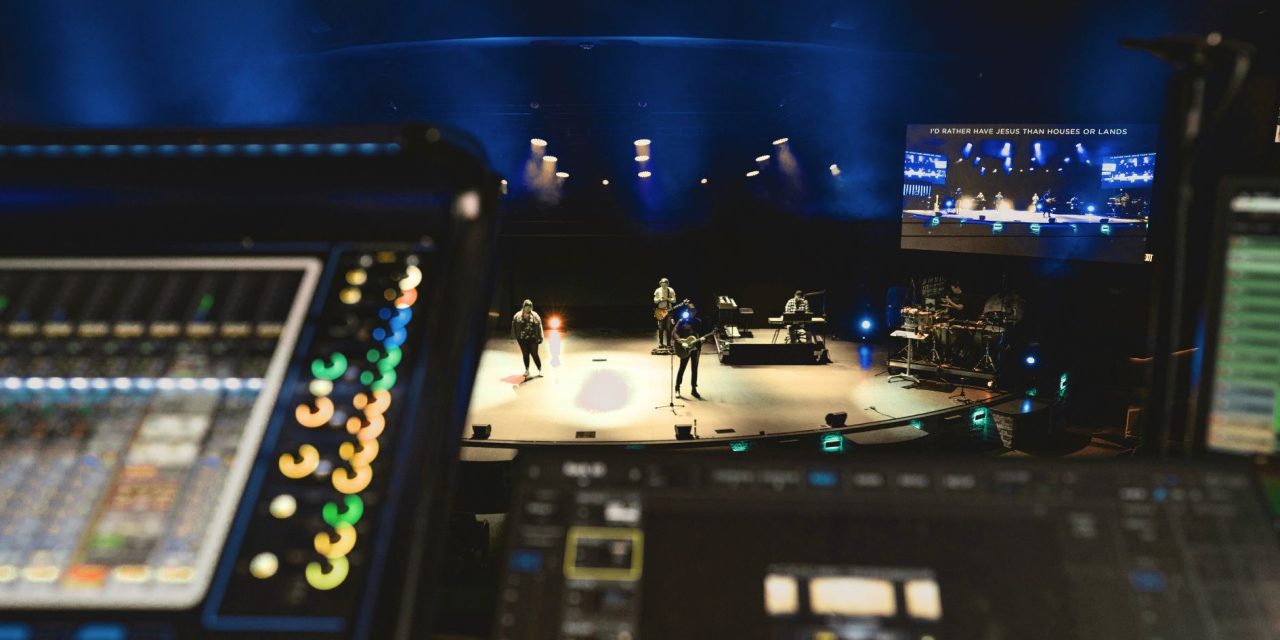
Auto-Tune and vocal processing became increasingly normal, especially for live recordings intended for global streaming audiences. Meanwhile, modern church stage setups evolved into highly technical environments featuring:
- in-ear monitoring systems
- FOH mixing consoles
- click tracks
- backing tracks
- drum machines
- synchronized lighting
These tools helped worship bands maintain consistency in massive venues where raw live sound alone could struggle to translate clearly.
Even ministries like Passion Conferences began building worship experiences around highly refined production systems that blended live worship with studio-level sound quality.
The Growing Questions About Authenticity
As worship production became more polished, conversations about authenticity also grew louder.
Some worshippers embraced the cinematic sound because it created emotionally immersive worship environments. Others worried that worship music was beginning to feel too performance-driven or emotionally engineered.
That tension helped spark renewed interest in:
- acoustic worship
- stripped-back arrangements
- spontaneous worship
- raw live recordings
- congregational-focused singing
In many churches, simpler worship songs started resurfacing as people searched for worship experiences that felt more personal and less production-centered.
Ironically, the same worship movement that spent years building arena-sized soundscapes eventually began rediscovering the power of quiet moments again.
Conclusion
The rise of production-heavy worship music transformed modern church culture completely. Advances in technology allowed worship ministries to create massive, emotionally immersive experiences that reached global audiences and reshaped contemporary worship expectations.
At the same time, this evolution introduced ongoing questions about balance, authenticity, and the role production should play in spiritual connection. Modern worship now exists in the tension between excellence and simplicity, spectacle and intimacy, polish and raw honesty.
That conversation is far from over.
Do you think modern worship production has made worship more powerful or more distracting? Share your thoughts in the comments, and keep exploring the evolution of church worship culture with DLK Praise and Worship!