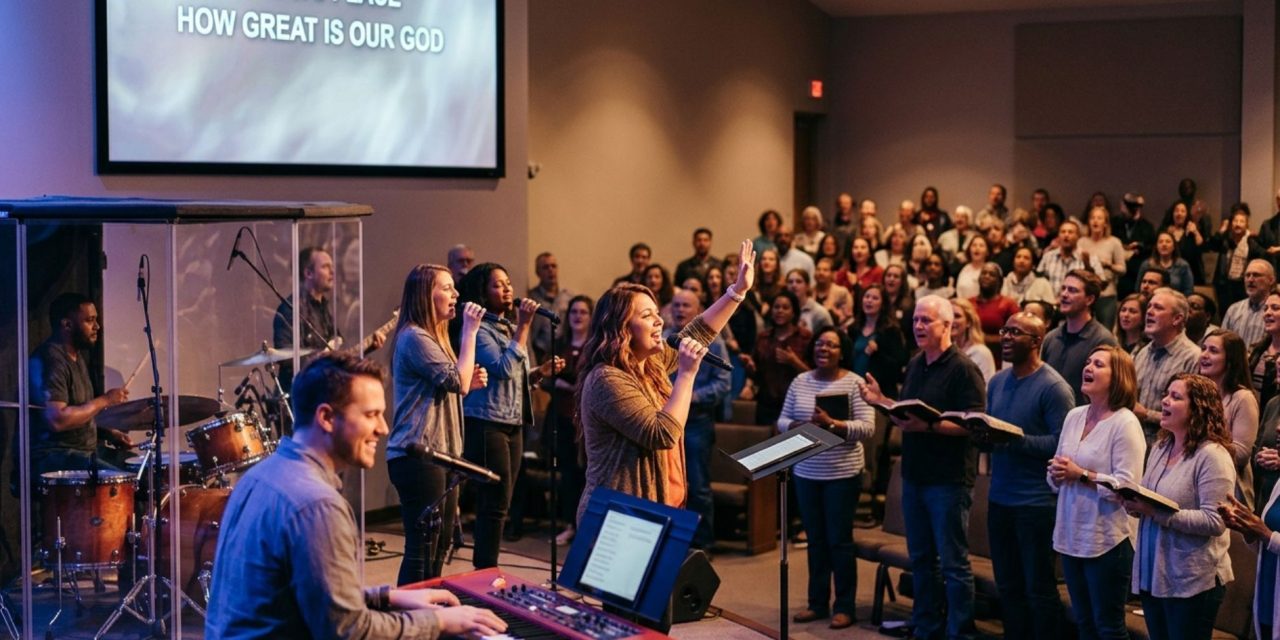
The worship leader starts the first song, and a few confident voices rise immediately. Others watch the screen, hoping the lyrics will become familiar before the chorus arrives.
Then comes the second song. The drummer knows it, the keyboardist loves it, and someone in the congregation whispers, “Is this the right one?” Even sincere worship can struggle when the setlist leaves people behind.
Choosing worship songs is not simply about finding the latest chart-toppers. Church leaders must balance familiar melodies, meaningful lyrics, singable arrangements, and the practical demands of weekly services.
Resources such as CCLI reports and Planning Center can help teams plan more effectively. Yet the real question remains: Are the songs helping the congregation worship, or are they asking everyone to audition for the choir?
A thoughtful worship set can welcome newcomers, encourage participation, and create space for reflection. These six strategies show how church leaders can use song trends, planning tools, and musical preparation to serve their congregations more intentionally.
Implications for Church Leaders
Worship leaders often face a familiar dilemma. Introduce too many new songs, and the congregation may spend more time reading lyrics than singing them. Repeat only older favourites, and the setlist may begin to feel predictable.
The solution is not choosing between tradition and freshness. It is understanding how both can serve the congregation.
CCLI reports can offer insight into popular worship selections, while Planning Center can support scheduling, collaboration, and service preparation. These resources should inform decisions rather than replace pastoral judgment.
Church leaders must consider the message of each song, its suitability for the congregation, and the team’s ability to lead it confidently. Themes such as grace, hope, surrender, and redemption can help shape a cohesive worship experience.
Current worship charts may reveal what listeners are hearing. They cannot determine what every congregation needs on a Sunday morning.
Six Actionable Strategies for Worship Leaders
1. Balance Current Songs with Familiar Favorites
A worship set can introduce new music without making the congregation feel like it has arrived at a surprise music exam.
Leaders can pair newer worship songs with familiar selections that people already know. For example, a recent Elevation Worship song could appear alongside Chris Tomlin’s How Great Is Our God.
There is no fixed percentage that works for every church. The balance should reflect the congregation’s familiarity, age range, musical background, and worship culture.
The aim is to introduce fresh expressions of faith while giving worshippers enough familiarity to participate confidently.
2. Use Planning Tools for More Efficient Preparation
Worship planning includes more than selecting songs and hoping everyone remembers the arrangement.
Teams must coordinate musicians, vocalists, lyrics, service times, song keys, and copyright reporting. Planning Center can help organise these details and improve communication.
Where available, integrations and reporting features may reduce repetitive administrative tasks. Leaders should confirm the platform’s current capabilities before relying on specific functions.
Better organisation allows worship teams to spend less time chasing information and more time preparing to serve.
3. Prioritize Singability in Every Key and Tempo
A song can sound magnificent on a recording but become a vocal obstacle course in church.
Vocal range, key, tempo, phrasing, and repetition all influence whether a congregation can sing comfortably. Leaders should select keys that suit the people in the room, not simply copy the original recording.
They should also adjust tempos when necessary. An anthemic chorus can encourage participation when its arrangement matches the congregation’s abilities.
The most effective arrangement is not always the most dramatic. It is the one that helps people sing without feeling they need professional vocal training first.
4. Train Teams to Build Natural Song Transitions
A worship set should feel like a connected journey rather than several songs waiting in line for their turn.
Teams can rehearse transitions that move from quiet reflection to declaration and then to celebration. The progression should support the service’s theme without becoming a performance in its own right.
For example, a set might move from the reflective mood of Reckless Love into Way Maker. The final song should depend on the message, arrangement, and congregation’s response.
Leaders should consider compatible keys, tempos, and lyrical connections. Smooth transitions help maintain focus and prevent awkward musical traffic jams.
5. Use Engagement Feedback Carefully
Digital engagement can offer useful information, but streaming numbers cannot tell the whole story.
A song may receive thousands of online plays while remaining unfamiliar to the congregation. Conversely, a less visible song may become deeply meaningful within a local church.
Leaders can review available digital data alongside direct feedback and in-person observation. They should consider whether people sing confidently, follow the lyrics, and engage with the service.
This broader approach helps teams refine setlists without allowing online popularity to become the unofficial worship director.
6. Plan Licensing Budgets Responsibly
Copyright licensing may not inspire spontaneous dancing, but ignoring it can create much less enjoyable problems later.
Churches using projected lyrics, recorded music, livestreams, or online services must understand the permissions their activities require.
Costs and coverage vary according to the provider, territory, licence type, and intended use. Leaders should confirm current pricing and terms directly with the relevant licensing organisation.
A responsible budget should also account for reporting requirements, streaming permissions, equipment, and other service needs.
Good planning allows churches to support worship ministry while protecting the organisation and its digital services.
Conclusion
Worship leadership requires musical preparation, spiritual sensitivity, and an understanding of the people gathered in the room.
CCLI reports, planning software, engagement feedback, and licensing information can support better decisions. However, none of these tools can replace the leader’s knowledge of the congregation.
Familiar songs can encourage participation, while carefully selected new music can broaden the church’s worship vocabulary. The strongest setlists make room for both.
When church leaders balance current trends with singability, biblical themes, and responsible planning, worship becomes less about impressing the room and more about inviting every voice into the song.
A worship song can move your heart, but can your congregation actually sing it? DLK Praise and Worship explores the choices behind meaningful worship, from Scripture and prayer to songs that give every voice room to rise.


