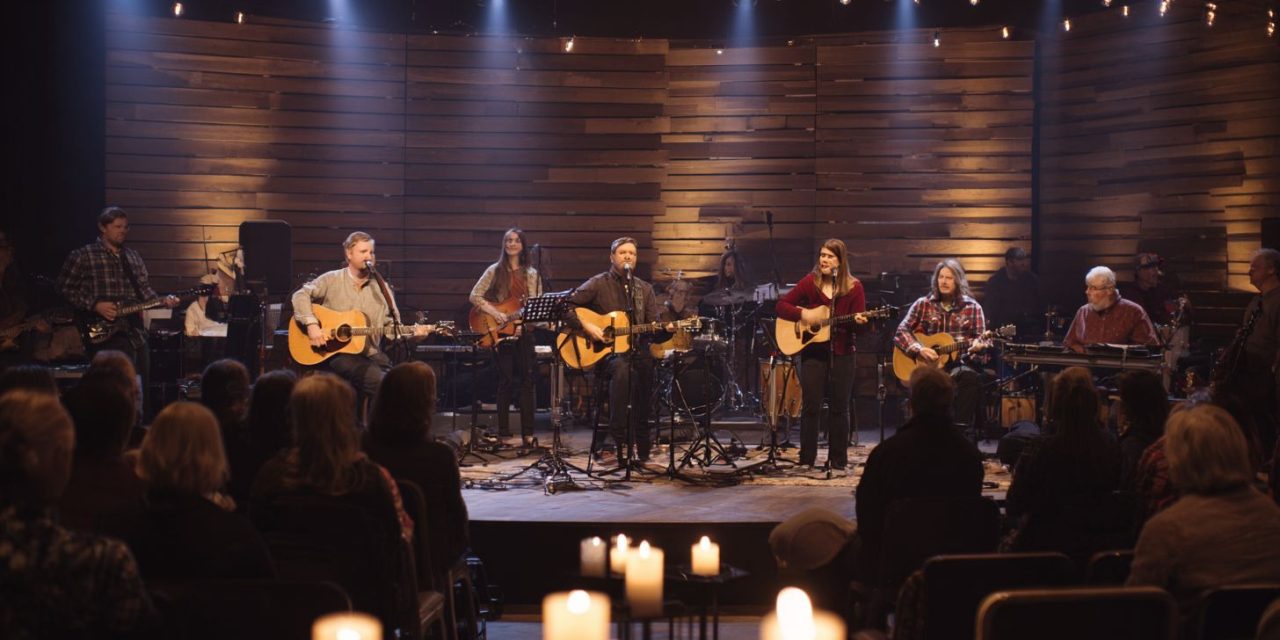
Picture a packed room—lights, screens, layers of sound all dialed in. And then… everything pulls back. A single guitar, a steady voice, and suddenly the atmosphere shifts. No big drop, no dramatic build—just something real.
That’s the quiet strength of acoustic-rooted worship.
In a time where production keeps getting bigger, these stripped-down moments keep proving something powerful: you don’t need more layers to reach people—you need more truth. This piece unpacks why acoustic worship songs continue to resonate so deeply, from their raw musical structure to their emotional and spiritual impact in real worship spaces.
Core Characteristics of Acoustic-Rooted Worship
These songs typically limit themselves to 3–5 instruments—most often acoustic guitar, piano, and simple vocal harmonies. There’s no reliance on synths or heavy processing. The focus stays exactly where it should be: on the message and the moment.
Acoustic-rooted worship songs stand out because they prioritize authenticity over polish. You’ll often hear familiar chord progressions like G–C–Em–D, making them easy to play and even easier to sing in a congregational setting.
Six defining traits shape their impact:
- Tempos of 65–80 BPM create space for reflection and intimacy
- Dynamic range above 10dB allows songs to breathe and build naturally
- Simple chord progressions support accessibility for worship leaders
- No auto-tune preserves raw, human vocal expression
- Capo usage helps adapt songs to comfortable vocal ranges
- Short, clear structures (verse–chorus–bridge under 5 minutes) fit church flow
Compared to heavily produced tracks, acoustic songs show natural rises and falls in sound—what you might call emotional breathing room. That openness creates space for genuine connection during worship.
Artists like Bethel Music and Hillsong Worship often lean into unplugged versions to highlight exactly this.
What Defines Acoustic Worship at Its Core
At its heart, acoustic worship is about stripping back to essentials.
Instead of building upward with layers, it builds inward—with intention. A guitar, a piano, and a voice are often enough. Tools like a Taylor 814ce or a Shure SM58 aren’t just gear—they’re part of a philosophy: keep it simple, keep it real.
This approach mirrors the timeless simplicity of songs like It Is Well, where the power isn’t in arrangement—it’s in truth.
Without heavy effects, lyrics centered on surrender, grace, and vulnerability come forward naturally. It’s a style that thrives in prayer rooms, small gatherings, and even large spaces when the goal shifts from performance to participation.
Acoustic vs Production-Heavy Worship: A Necessary Contrast
Modern worship has embraced production—synth layers, ambient pads, and polished vocal chains are now standard. And there’s value in that.
But there’s also a risk: when everything is big, it can become harder to feel something personal.
Acoustic worship offers a counterbalance.
While production-heavy tracks can feel immersive, they can also become dense. Acoustic songs cut through that by being clear, direct, and human. You hear the breath in the vocal. You feel the space between chords.
Groups like Elevation Worship and Jesus Culture often release both styles—but it’s their stripped-down moments that tend to linger longer.
Simplicity doesn’t compete with production—it completes it.
Why Singability Changes Everything
At the center of acoustic worship’s staying power is one key idea: people can actually sing it.
Simple melodies, predictable structures, and accessible keys make it easy for anyone in the room to join in. That’s not a small thing—it’s the difference between listening and participating.
Songs from CCLI charts often reflect this. The most widely used songs aren’t the most complex—they’re the most singable.
This matters across every setting:
- Church gatherings
- Prayer meetings
- Seasonal services like Easter or Christmas
- Small group or home worship
Without heavy vocal effects or complicated arrangements, the focus shifts back to unity. Everyone can engage, regardless of skill level.
And that’s where acoustic worship quietly wins—it turns a song into a shared experience.
Conclusion
Acoustic-rooted worship reminds us of something easy to forget in a world of constant upgrades: more isn’t always deeper.
By removing layers, it reveals what actually matters—honest lyrics, real voices, and space for people to connect with God without distraction. It doesn’t fight against modern production; it simply offers another way in.
And in many cases, it’s the way that lingers the longest.
Because when everything else fades—the lights, the mix, the moment—what remains is the truth being sung. And sometimes, all it takes is a guitar and a willing voice to carry that.
Have you ever noticed how the simplest worship moments are often the ones that stay with you the longest? Stay locked into more real, heartfelt worship insights and discover what truly moves people in worship on DLK Praise and Worship!