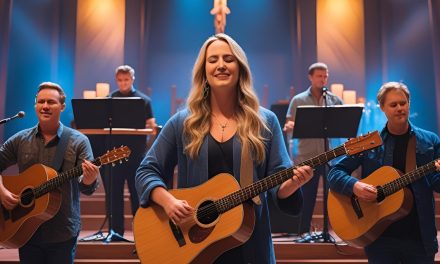
There’s a noticeable shift happening in worship—less “how I feel,” more who God is.
And honestly, it can catch people off guard. You go from singing about personal breakthroughs to suddenly declaring “Holy, holy, holy” on repeat—and it feels… weightier. More serious. More reverent.
That shift isn’t random. It’s rooted in a deeper theological idea: that worship begins not with us, but with God’s holiness.
The Theological Core Behind Holiness Songs
Holiness songs are built on one central truth—God is completely other.
Theologian A. W. Tozer, in The Knowledge of the Holy, emphasized that real worship starts with understanding God’s absolute purity and transcendence. Not just that God is good—but that He is set apart, beyond comparison.
Similarly, John Piper, in Desiring God, connects this holiness to joy. The idea is simple but powerful: the more we recognize how holy God is, the more our worship becomes genuine, not forced.
You can hear this theology clearly in modern songs like “Holy Forever” by Chris Tomlin and music from Bethel Music. These songs don’t just aim to inspire emotion—they aim to direct attention upward, toward God’s nature.
Even the structure of these songs reflects that focus. Verses often build a sense of awe, choruses repeat declarations of holiness, and bridges shift into surrender or cleansing. It’s not accidental—it mirrors Scripture.
Isaiah 6: The Blueprint Behind the Sound

If there’s one passage that shapes holiness songs more than any other, it’s Isaiah chapter 6.
In that vision, the prophet encounters God seated on a throne, surrounded by seraphim crying, “Holy, holy, holy.” The moment is overwhelming—so much so that Isaiah immediately becomes aware of his own unworthiness.
That pattern shows up clearly in “Holy Forever.” The imagery of God’s glory reflects Isaiah’s vision, the repeated chorus echoes the seraphim’s cry, and the bridge carries that same response—recognition, surrender, and a desire for cleansing.
Theologian R. C. Sproul described this moment as one where God’s holiness exposes human sin and demands a response. That same tension—between awe and humility—is what gives holiness songs their depth.
Other worship movements like UPPERROOM and Jesus Culture also lean into this pattern, creating songs that feel less like performances and more like participation in something eternal.
This is why these songs resonate so strongly in large gatherings, from church services to events like Passion Conference. They invite people into a shared moment of reverence—something bigger than individual experience.
Conclusion
Holiness songs remind us that worship isn’t just about expression—it’s about perspective.
They pull attention away from personal emotion and redirect it toward God’s nature. In doing so, they create a balance: emotion is still present, but it’s grounded in truth. Awe replaces casualness, and reverence deepens the experience.
And in a time where everything competes for attention, that shift matters.
Because sometimes, the most powerful thing a room full of people can do… is simply recognize who God is.
When you’re worshipping, do you naturally lean more toward songs about your personal experience—or the ones that focus completely on God’s holiness?Let us know what actually resonates with you and why—and keep growing in deeper, more meaningful worship with DLK Praise and Worship.