Some artists grow into their sound over time—others carry it from the very beginning.
Lizzie Morgan falls into that second category. Her journey from a small church setting to a rising voice in modern worship feels less like a career move and more like a steady unfolding of purpose. And while songs like “Not My Will” are gaining attention, they are really just a window into something deeper—her foundation, her formation, and her message.
Early Life and the Foundations of a Worship Voice
Lizzie Morgan’s story begins in a local church environment in Chattanooga, Tennessee, where music wasn’t just performance—it was participation.
Starting piano at age seven, she developed not only technical skill but also a sensitivity to how music supports worship. By fourteen, she had already written her first song, “Hold On,” during a youth retreat—a moment that revealed her early inclination toward songwriting rooted in personal faith experiences rather than abstract ideas.
Formal piano training further strengthened her musical language, giving her the tools to translate emotion into structure. This balance between discipline and expression would later define her style—simple enough to be accessible, yet intentional enough to carry depth.
Her transition into leading youth worship in 2015 marked a turning point. It moved her from private creativity into public ministry, where she learned how to guide a room, respond to atmosphere, and create space for spontaneous moments. These early leadership experiences shaped her identity not just as a singer, but as a worship leader.
Key moments accelerated that journey. Sharing covers online—including “You Say” by Lauren Daigle—expanded her reach beyond her immediate environment. Leaving her nursing career in 2021 signaled a decisive commitment to music, and signing with Influence Music in 2023 positioned her within a larger creative and ministry ecosystem.
Each step built on the last, creating a progression that feels intentional rather than rushed.
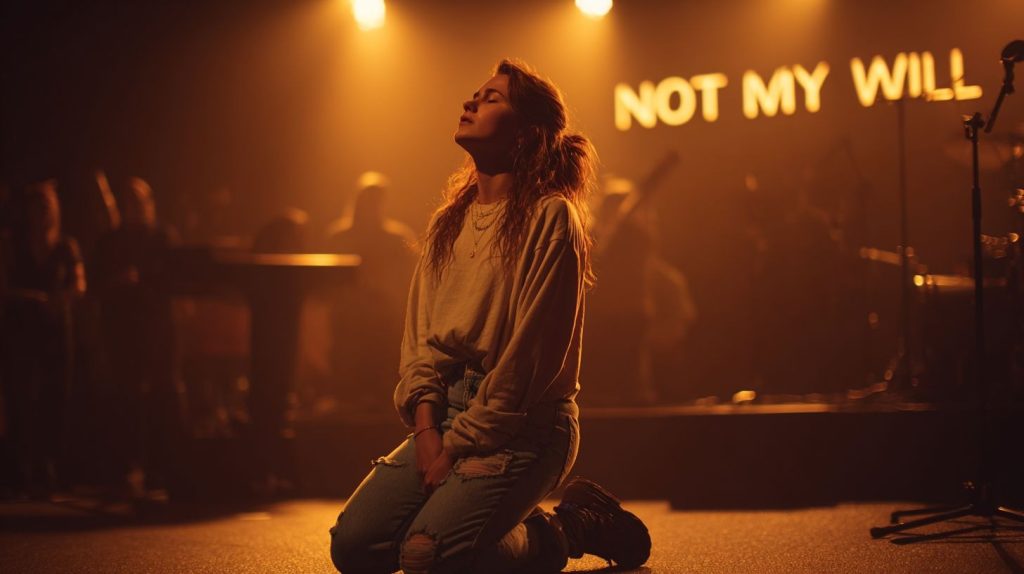
“Not My Will” as a Reflection of Her Artistic Identity
Released in 2024, “Not My Will” doesn’t just stand out because of its sound—it stands out because it captures the essence of who Lizzie Morgan is as an artist.
Built around a piano-driven foundation with gradual dynamic growth, the song reflects her roots while embracing modern production. The arrangement moves from intimate verses into expansive choruses, creating a natural emotional arc that mirrors the theme of surrender.
But what makes the song resonate is its clarity of message.
The central line—“Not my will, but Yours be done”—draws directly from Matthew 26:39, grounding the song in Scripture while making it immediately relatable. Rather than overcomplicating the idea, the lyrics stay focused, allowing repetition to reinforce meaning in a congregational setting.
Structurally, the song follows a familiar but effective pattern. Verses introduce internal tension, pre-choruses build anticipation, and choruses release into declaration. The bridge intensifies that message, often creating space for extended worship moments in live settings.
This approach aligns her with the broader sound of contemporary worship while still maintaining a distinct voice. There are echoes of artists like Kari Jobe and movements like Bethel Music, but her delivery carries a personal sincerity that keeps it from feeling derivative.
Ultimately, the song works not because it tries to impress, but because it communicates something honest—and that honesty is what defines her artistry.
Conclusion
Lizzie Morgan’s rise isn’t built on trends—it’s built on consistency.
From early church experiences to larger platforms, her journey reflects a steady commitment to both musical growth and spiritual depth. “Not My Will” may be the song drawing attention right now, but it represents a broader trajectory—one shaped by intentional development, lived faith, and a clear sense of calling.
And if this is where the journey is now, it suggests something even more compelling ahead.
Have you come across “Not My Will” yet—and did it actually connect with you, or just pass by like another worship song?
Let us know what you genuinely felt when you heard it, and stay locked in with emerging worship voices on DLK Praise and Worship.